
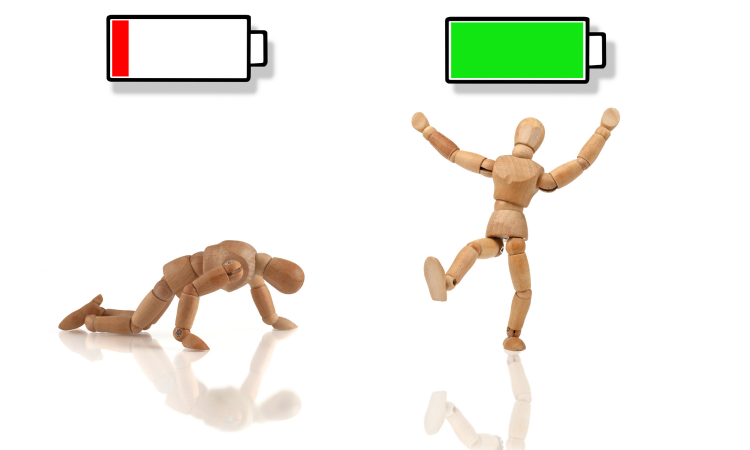
One of the most common challenges leaders raise with me is navigating change. It’s constant, fast, and often relentless. I feel it too – in business, in life, and I’m sure you do as well. Leading through change isn’t about waiting for stability; it’s about how we respond in real time.
This concept is explored further in Intentional Leadership Development: How To Become A Deliberate Leader.
Why Change Feels Different For Every Team
Change isn’t approaching. It’s already here – shifting priorities, stretching capacity, and demanding decisions. Some people thrive in the momentum, fuelled by challenge and opportunity. Others are running on empty, worn down by the pace.
Leading change isn’t just about strategy. It’s about people. This is often where leadership development plays a critical role, helping leaders build the clarity and energy their teams need to navigate change effectively.
And it comes down to two critical factors: how clearly people understand what’s changing and how much energy they have to respond.
These two factors define how people experience change.
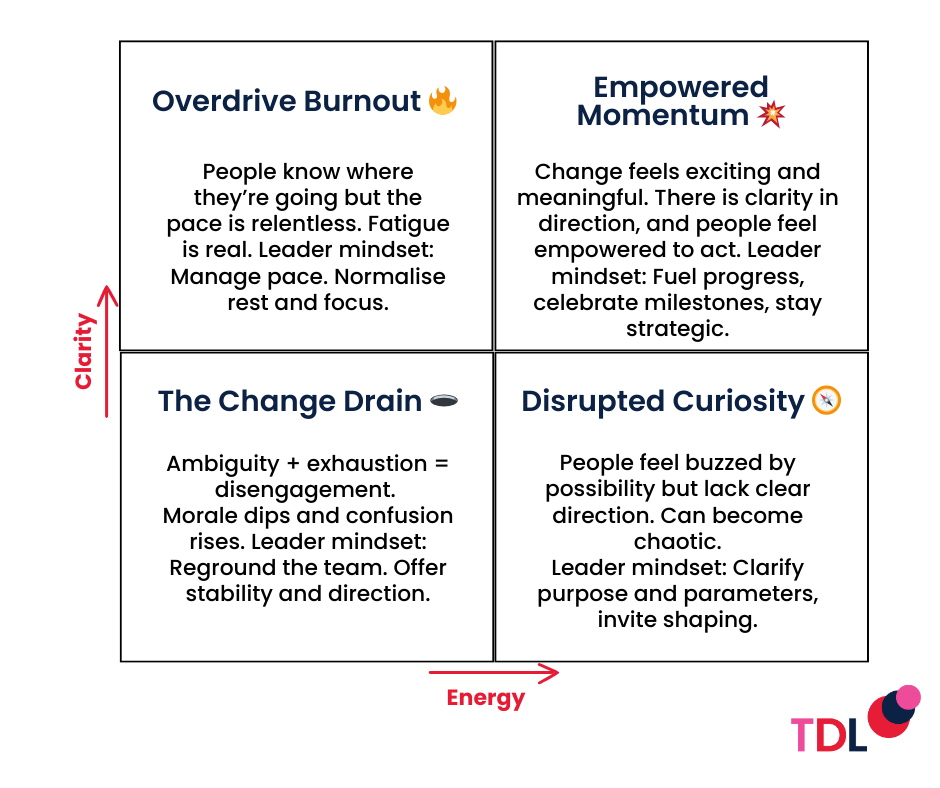
The Four States Of Change In Leadership
When both are strong, you get Empowered Momentum – change with purpose. People know where they’re heading and have the capacity to move. Teams in this space are switched on, motivated, and delivering impact. The challenge? Keeping them focused without pushing them too far.
Clarity alone isn’t enough. Overdrive Burnout happens when people understand what’s needed but the pace is unsustainable. They’re pushing through, but the spark is fading. Here, leadership is about managing intensity – slowing the tempo, creating space to reset, and ensuring recovery is part of the plan.
High energy without clear direction leads to Disrupted Curiosity. There’s excitement, but no clear path. This can fuel innovation or create chaos. This is where clarity in ambiguity becomes essential in guiding focus without shutting down momentum.
And then there’s The Change Drain – when people are unclear and depleted. Engagement drops, not because people don’t care, but because they’ve stopped believing their effort leads anywhere. This is where culture can break down. Leadership in this space is about simplifying, clarifying, and rebuilding trust – one step at a time.
What Leaders Must Do in Each State
Teams move through these states. Individuals experience them differently. That’s the reality of change – unpredictable, human, and never one-size-fits-all.
A Question Worth Asking as You Lead Change
So ask yourself:
❓ Is your team energised or exhausted? Clear or uncertain?
❓ And what would it take to shift even one person closer to clarity and momentum?
Because change isn’t waiting. How you lead through it will define what comes next.
If this is something you’re navigating right now, it may be worth stepping back and book a call to support your next phase of leadership.
Frequently Asked Questions
What Does Leading Through Change Involve?
It involves guiding people through uncertainty by balancing clarity, energy, and direction while maintaining trust and focus.
Why Do Teams Feel Exhausted During Change?
Teams become exhausted when demands increase without enough recovery, clarity, or support to sustain performance.
How Can Leaders Maintain Energy During Change?
By managing pace, creating space for recovery, and aligning work with realistic capacity.
What Is The Role Of Clarity In Change Leadership?
Clarity helps people understand direction and priorities, reducing confusion and improving engagement.
How Can Leaders Move Teams From Confusion To Momentum?
By simplifying direction, reinforcing purpose, and building small, visible wins that restore belief and progress.
Ways to work with me:
💬 One-on-one coaching
🎯 Leadership development and training
🎤 Book me as a Speaker or MC for your next event