

Recently, I spent time with a leadership group exploring the kind of feedback that genuinely creates change.
What surprised the room wasn’t a new script or framework.
It was the conversation around intention.
Because the feedback that lands best is rarely the most polished or perfectly structured.
It’s the feedback delivered with honesty, humanity, and clear intent.
Too often, leaders focus only on what they want to say.
But high-impact feedback begins with why you are saying it.
That’s where intentional feedback changes everything.
The Feedback Intention Model explores the different intentions that sit beneath feedback conversations – and how those intentions shape the way feedback is received.
Some leaders give feedback to:
-
influence
-
inform
-
impact
-
initiate change
-
inoculate against future issues
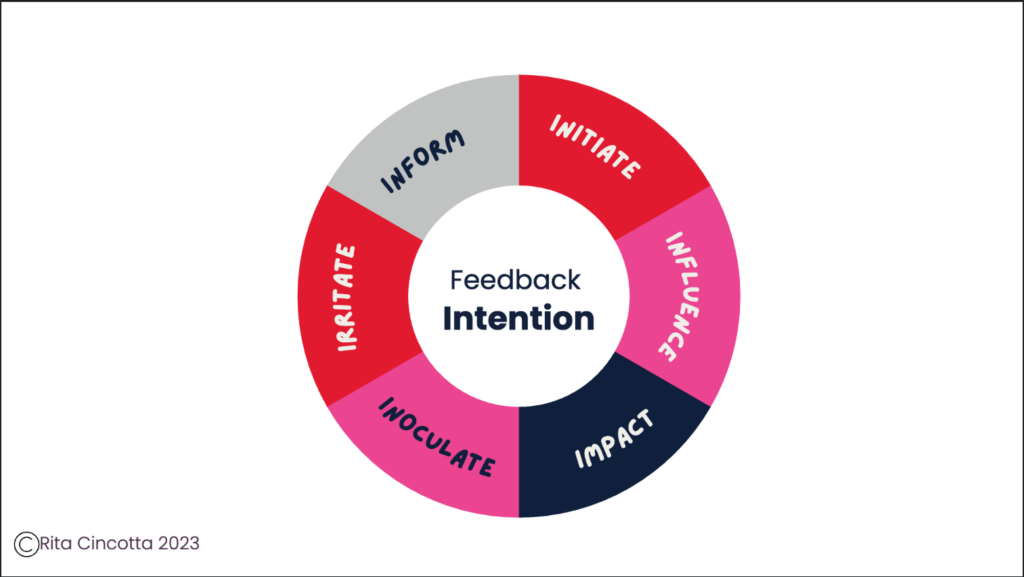
The challenge is that when leaders are unclear on their intention, feedback can become reactive, vague, defensive, or emotionally charged.
But when leaders pause and ask:
“What is my intention in this conversation?”
the quality of the conversation shifts immediately.
Feedback stops feeling like criticism and starts feeling like contribution.
The feedback that fuels performance is:
-
specific enough to create action
-
future-focused rather than anchored in blame
-
balanced with belief, so it stretches rather than diminishes
-
delivered at the right moment, not in the heat of frustration
-
grounded in partnership, not hierarchy
-
intentional in its purpose
The most effective leaders I’ve seen this year didn’t avoid difficult feedback conversations.
They elevated them.
They shifted the tone from:
“Here’s what’s wrong.”
to:
“Here’s what’s possible.”
One leader I worked with began every feedback conversation with:
“Here’s what I value in your work. And here’s where I see an opportunity for you to grow.”
Her team didn’t become defensive.
They became motivated.
Because when feedback is delivered well, people don’t just hear criticism.
They hear:
-
belief
-
clarity
-
care
-
investment
Intentional feedback creates psychological safety while still holding accountability.
It allows leaders to be candid without being crushing.
Clear without being cold.
Direct without diminishing.
And perhaps most importantly, it reminds people that feedback is not simply about performance management.
It’s about leadership.
Because feedback isn’t simply a performance tool.
It’s a relationship tool that strengthens performance.
If feedback conversations feel harder than they should, it may not be the conversation itself – but the intention beneath it. Deliberate leadership starts with greater self-awareness. Our free Leadership Self-Assessment Diagnostic is designed to help leaders better understand how they lead, communicate, and show up in moments that matter most.